12 Fresh Summer Kitchen Ideas to Beat the Heat
Summer brings longer days, outdoor gatherings, and the challenge of keeping your kitchen cool while still creating delicious meals. The kitchen often becomes the hottest room in the house during summer months, making cooking feel more like a chore than a pleasure. With these 12 innovative summer kitchen ideas, you can transform your cooking space into a cool, refreshing oasis that makes meal preparation enjoyable even on the hottest days.
Why Summer Kitchen Design Matters
Summer kitchen design isn’t just about aesthetics – it’s about functionality, comfort, and energy efficiency. A well-designed summer kitchen reduces heat buildup, improves airflow, and creates an inviting space for both cooking and entertaining. Whether you’re preparing fresh salads, grilling indoors, or hosting summer dinner parties, these ideas will help you beat the heat while maintaining style and functionality.
1. Embrace Light and Bright Color Schemes
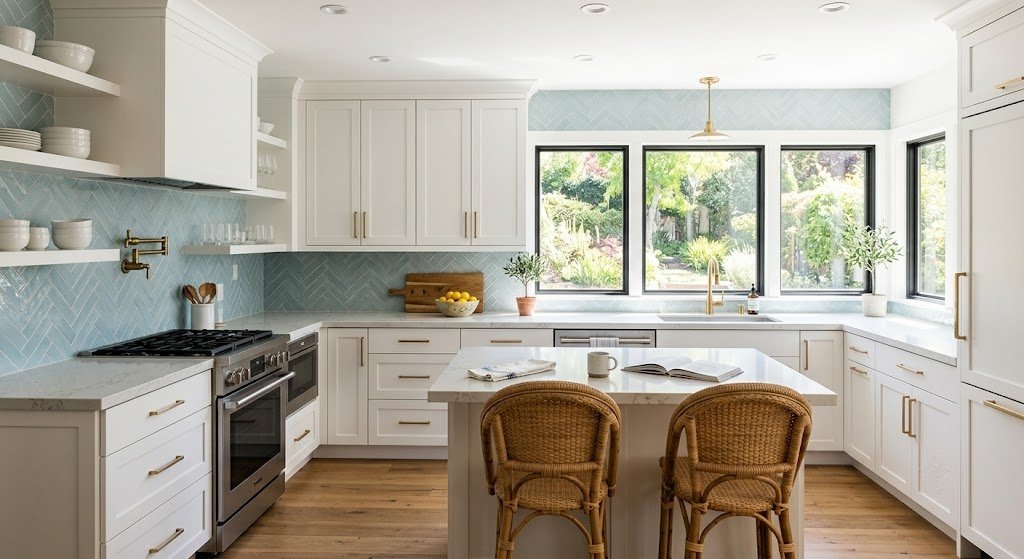
Light colors are your best friend in summer kitchen design. White, cream, and pale pastels reflect heat rather than absorbing it, helping to keep your kitchen naturally cooler. Consider painting your cabinets in crisp white or soft mint green, and choose light-colored countertops that won’t become hot to the touch in direct sunlight.
Pale blue backsplashes evoke feelings of coolness and ocean breezes, while light wood finishes add warmth without overwhelming the space. These color choices not only help regulate temperature but also create a fresh, airy atmosphere that feels inherently summery.
2. Install Efficient Ventilation Systems
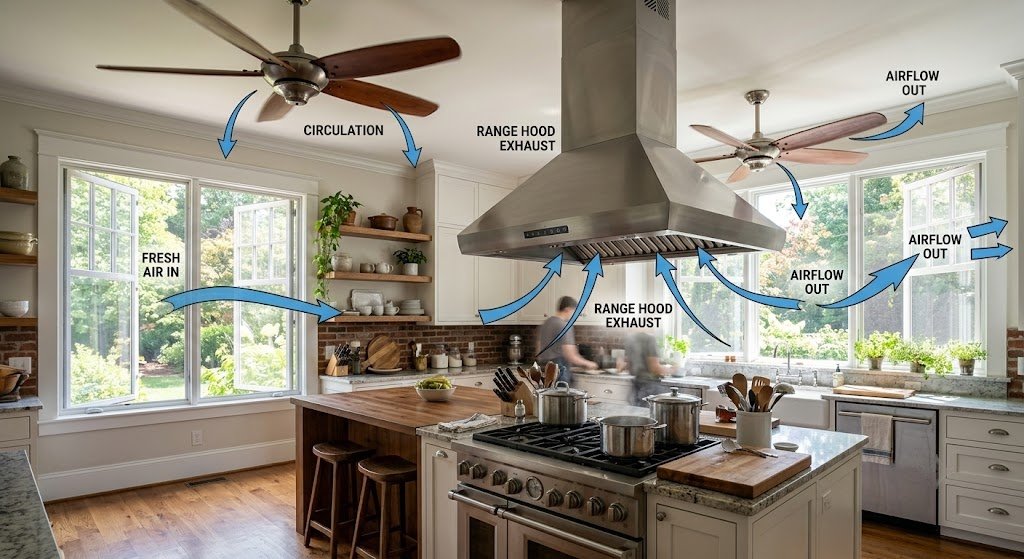
Proper ventilation is crucial for maintaining a comfortable summer kitchen. Upgrade to a high-performance range hood that efficiently removes heat, smoke, and odors from your cooking area. Look for models with variable speed settings and heat sensors that automatically adjust to cooking conditions.
Ceiling fans strategically placed throughout the kitchen and adjacent areas help circulate air and create cooling breezes. Choose fans with reversible motors so you can adjust the direction based on the season and your cooling needs.
3. Incorporate Natural Cooling Elements
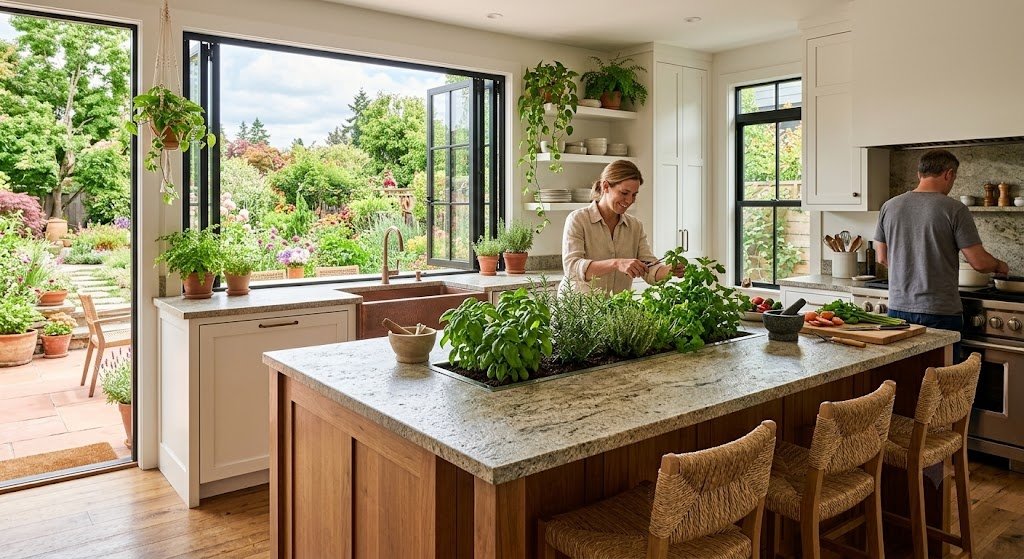
Bring natural cooling elements into your kitchen design. Living plants not only purify the air but also release moisture that can help cool the surrounding area. Consider installing a small herb garden on your windowsill or kitchen island – it provides fresh ingredients while adding natural humidity to combat dry summer air.
Stone countertops like granite or quartz naturally stay cool to the touch, making them ideal for summer food preparation. These materials also add a spa-like quality that enhances the overall cooling effect of your kitchen.
4. Create Indoor-Outdoor Flow
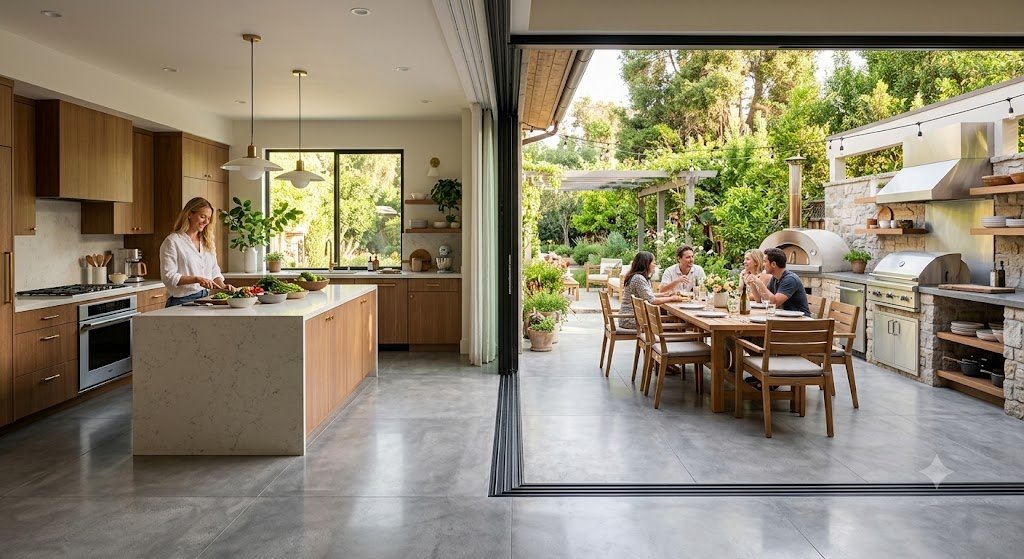
Maximize airflow by creating seamless connections between your indoor kitchen and outdoor spaces. Large sliding glass doors, French doors, or pass-through windows allow for natural ventilation while expanding your cooking and entertaining space.
Consider installing a kitchen pass-through window that connects to an outdoor dining area or deck. This feature allows you to serve meals easily while maintaining airflow between spaces. The psychological effect of connecting to outdoor spaces also makes the indoor kitchen feel less confined during hot weather.
5. Upgrade to Energy-Efficient Appliances
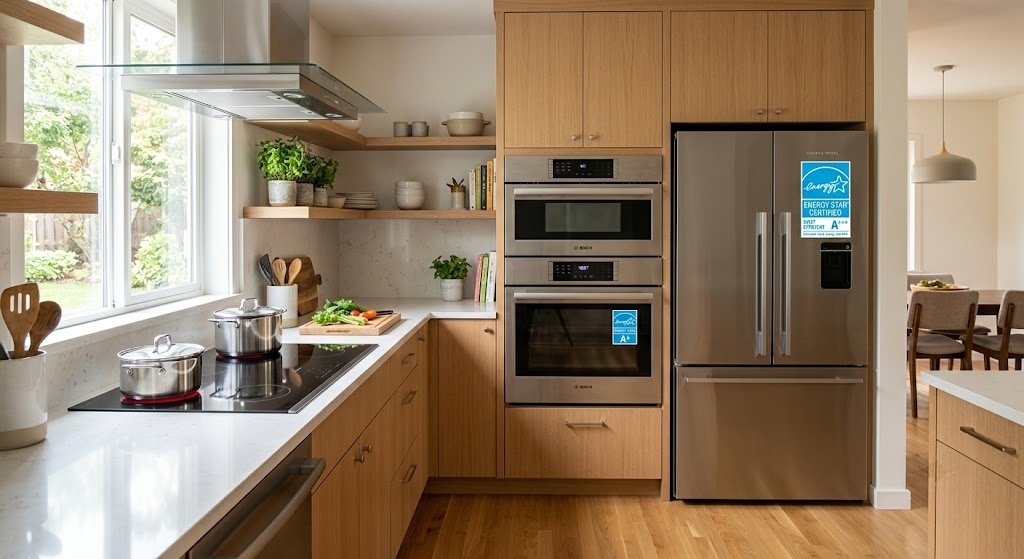
Energy-efficient appliances generate less heat while operating, making them essential for summer kitchen comfort. Induction cooktops are particularly effective because they heat only the cookware, not the surrounding air. This technology can reduce kitchen heat by up to 50% compared to traditional gas or electric ranges.
Look for ENERGY STAR certified refrigerators, dishwashers, and other appliances that operate more efficiently and generate less waste heat. These upgrades not only keep your kitchen cooler but also reduce energy costs during peak summer months.
6. Install Under-Cabinet Lighting
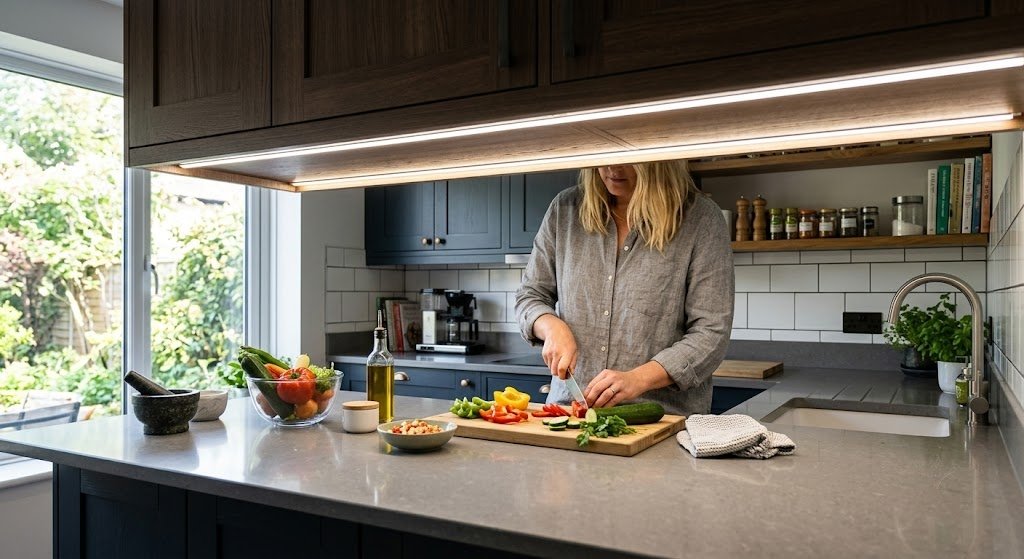
LED under-cabinet lighting provides excellent task lighting without generating heat like traditional incandescent bulbs. This allows you to work comfortably with overhead lights turned off during the day, reducing overall heat buildup in the kitchen.
Choose adjustable LED strips that can be dimmed according to your needs and time of day. The focused lighting improves safety and functionality while contributing to the overall cooling strategy of your summer kitchen.
7. Add Cooling Textiles and Materials
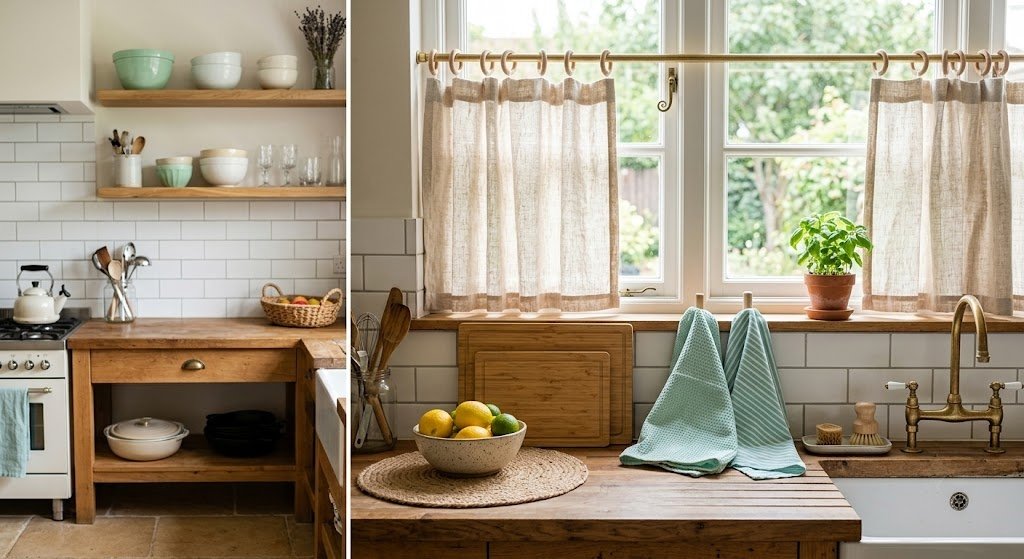
Incorporate cooling textiles that enhance both comfort and style. Linen curtains allow airflow while filtering harsh sunlight. Natural fiber rugs and placemats add texture without retaining heat like synthetic materials might.
Choose kitchen textiles in cooling colors like soft blues, greens, and whites. These colors not only look refreshing but also psychologically contribute to a sense of coolness and calm in your cooking space.
8. Design a Hydration Station
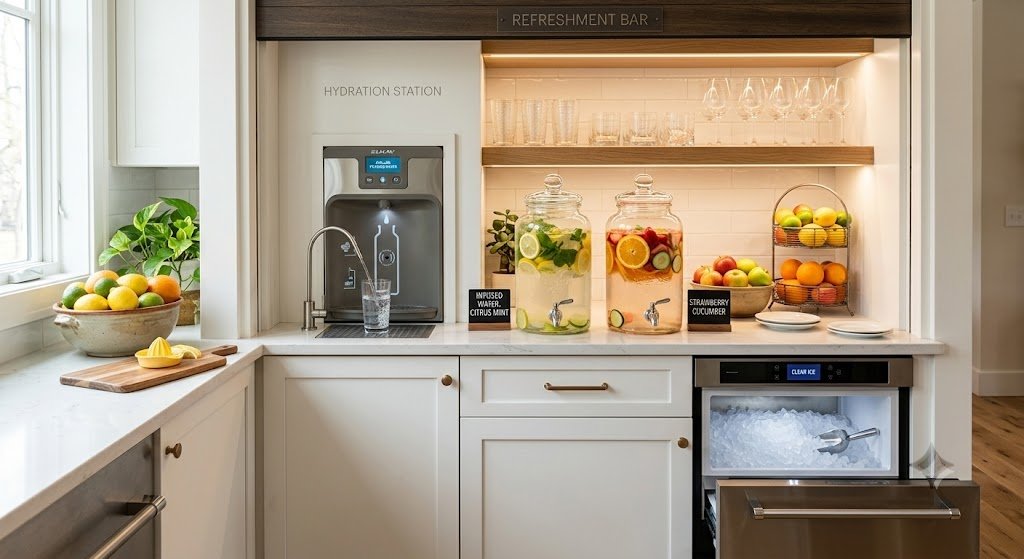
Create a dedicated hydration station that encourages drinking more water during hot summer days. Install a built-in water dispenser with both chilled and room temperature options. Include space for fruit-infused water dispensers, fresh fruit displays, and easily accessible glassware.
This functional area becomes a focal point that promotes healthy hydration habits while adding visual appeal to your kitchen. Consider including a small undercounter ice maker for convenient access to cold beverages and food preparation needs.
9. Incorporate Smart Technology
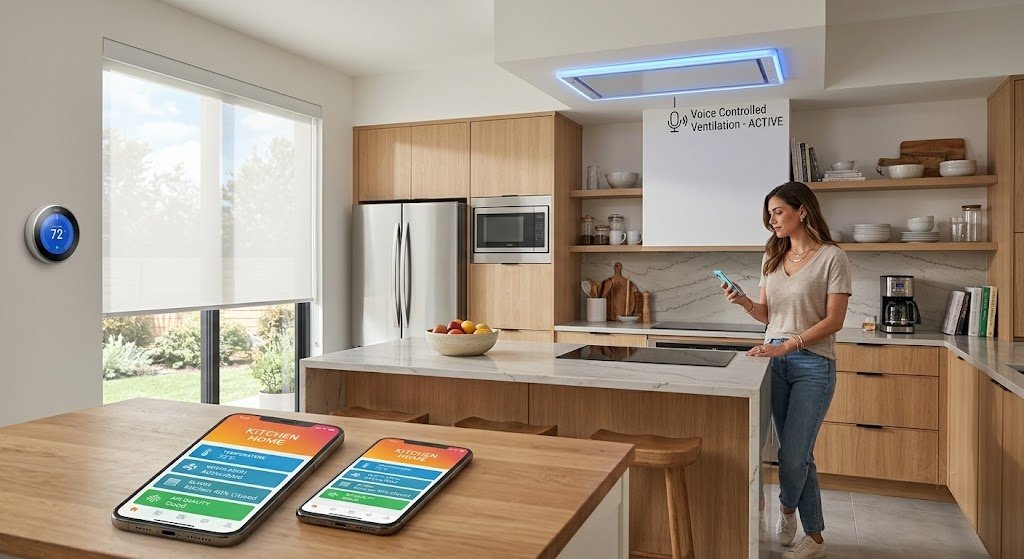
Smart technology can significantly improve your kitchen’s cooling efficiency. Programmable thermostats learn your cooking patterns and adjust cooling accordingly. Smart ventilation systems can detect cooking activity and automatically increase airflow when needed.
Automated window treatments can be programmed to block intense afternoon sun while allowing morning light and breezes. These technologies work together to maintain optimal kitchen temperature with minimal manual intervention.
10. Create Cold Food Preparation Zones
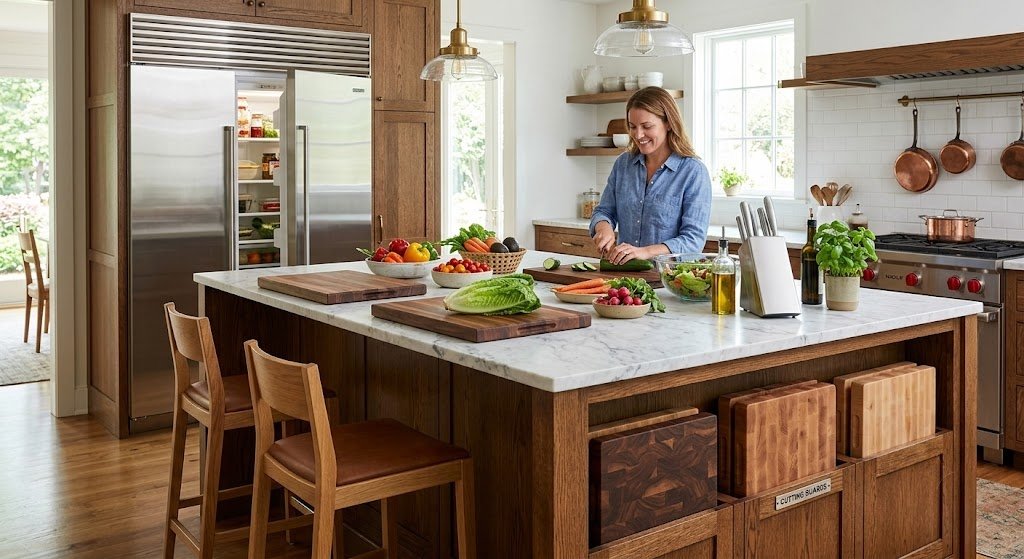
Designate specific areas for cold food preparation to minimize heat-generating cooking activities. A marble or granite-topped island provides an ideal cool surface for pastry work, salad preparation, and assembling no-cook meals.
Position these preparation zones near refrigerator access and away from heat sources like the oven and cooktop. Stock these areas with appropriate tools for cold food preparation, encouraging more summer-friendly cooking methods.
11. Install Window Treatments for Heat Control
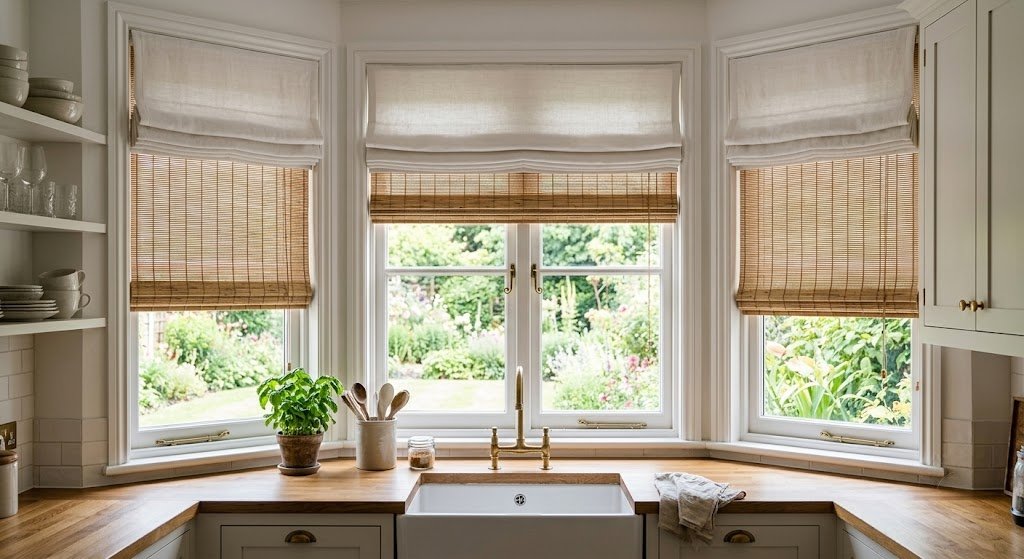
Effective window treatments are essential for controlling heat gain while maintaining natural light. Bamboo blinds filter light while allowing airflow, making them ideal for summer kitchens. UV-filtering window films can block up to 99% of harmful rays while reducing heat gain by up to 80%.
Layer different window treatment types for maximum flexibility. Light-filtering cellular shades can be combined with bamboo blinds to provide options for different times of day and weather conditions.
12. Design Efficient Storage Solutions
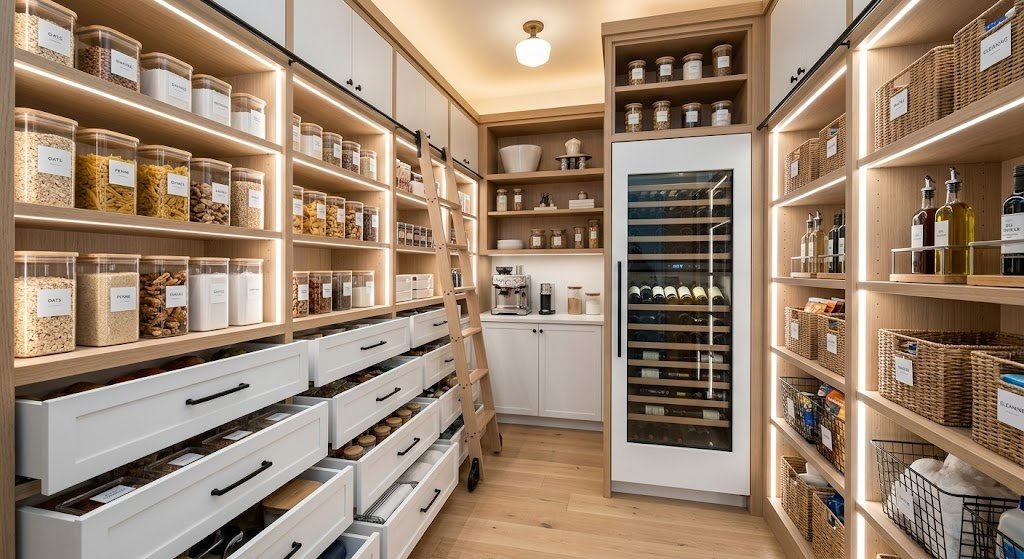
Efficient storage keeps your kitchen organized and reduces time spent searching for items in hot cooking areas. Pull-out drawers and lazy Susans minimize the time cabinet doors stay open, preventing cool air from escaping and warm air from entering.
Consider climate-controlled storage for items sensitive to heat, such as wine, chocolate, or certain spices. Organized storage also enables quicker meal preparation, reducing the time you spend in a hot kitchen during peak temperature hours.
Maintenance Tips for Summer Kitchen Efficiency
Regular maintenance ensures your summer kitchen cooling strategies remain effective throughout the season. Clean range hood filters monthly to maintain efficient ventilation. Service air conditioning systems before peak summer heat arrives. Check and clean refrigerator coils to ensure efficient operation.
Replace air filters in ventilation systems regularly, and keep ceiling fans dust-free for optimal air circulation. These simple maintenance tasks can significantly impact your kitchen’s cooling efficiency and overall comfort.
Energy-Saving Benefits
Implementing these summer kitchen ideas doesn’t just improve comfort – it can also reduce energy costs. Efficient ventilation reduces the load on your home’s air conditioning system. Energy-efficient appliances consume less electricity and generate less waste heat. Smart technology optimizes energy use based on actual needs rather than running systems continuously.
The combination of these strategies can reduce summer energy bills by 15-30% while creating a more comfortable cooking environment.
Entertaining in Your Cool Summer Kitchen
A well-designed summer kitchen becomes the perfect space for entertaining guests during warm weather. The improved airflow and cooling features make it comfortable for both cooking and socializing. Indoor-outdoor flow allows parties to move seamlessly between spaces, while efficient preparation zones make hosting easier and more enjoyable.
Consider how these cooling strategies enhance your ability to entertain, from casual morning coffee gatherings to elaborate dinner parties.
Conclusion
Creating a cool, comfortable summer kitchen doesn’t require a complete renovation – many of these ideas can be implemented gradually to build a more heat-resistant cooking environment. The key is combining multiple strategies that work together to reduce heat buildup, improve airflow, and create a refreshing atmosphere.
Start with simple changes like updating window treatments and adding efficient lighting, then gradually incorporate larger improvements like ventilation upgrades and energy-efficient appliances. The investment in summer kitchen comfort pays dividends in increased cooking enjoyment, reduced energy costs, and enhanced home value.
Remember that the best summer kitchen design balances functionality with style, creating a space that’s both practical for daily cooking and welcoming for summer entertaining. With these 12 fresh ideas, you can beat the heat while maintaining a beautiful, efficient kitchen that serves you well year-round.
Whether you’re preparing light summer salads, hosting outdoor dinner parties, or simply trying to stay cool while cooking family meals, these strategies will help you create the perfect summer kitchen environment. The result is a space that makes cooking a pleasure rather than a burden, even during the hottest days of the year.